Outside-in
Test applications, APIs, services and exposed infrastructure from the attacker-reachable surface — scoped to the approved engagement.
AUTONOMOUS SECURITY RESEARCH
0day Factory reasons across code, applications, infrastructure, identity, security controls, organizational constraints and runtime behavior to discover and prove exploitable attack paths — then re-tests the fix.
01 / YOUR SECURITY REALITY
0day Factory investigates the relationships between software, infrastructure, identities, controls and the rules unique to your organization.
FED BY: ORG RESTRICTIONS · SECURITY DNA · PRIOR FINDINGS · THREAT MODELS · EXCEPTIONS
02 / ONE INVESTIGATION
Test applications, APIs, services and exposed infrastructure from the attacker-reachable surface — scoped to the approved engagement.
Use approved internal context — source, architecture, identity, infrastructure, controls, policy and prior findings — to investigate weaknesses surface-only testing misses.
Both directions converge into a single attack graph and evidence trail — not two disconnected products.
03 / CONTEXT IS THE MOAT
Architecture, source, services, infrastructure, dependencies and trust boundaries.
Security controls, SDLC rules, internal standards, threat models and approved exceptions.
Runtime behavior, reachable paths, exploit evidence, past findings and remediation outcomes.
The goal is not another list of alerts. It is a defensible answer to: can this path actually be exploited here?
04 / HYPOTHESIS → PROOF → RE-TEST
ATTACKER OUTCOME · EXACT PATH · CONTROLS CROSSED/BYPASSED/MISSING · FAILED ASSUMPTION · PROOF · ENGINEERING FIX
05 / INSIDE THE WORKSPACE
Organize work by company, project and investigation. Review findings, confidence and the evidence behind each path in one workspace.
18 // Check access to the requested resource
19 const resource = await loadResource(id);
20 await authorize(user, resource.owner);
21 return serialize(resource);06 / CUSTOMER-CONTROLLED EXECUTIONPRIVATE PREVIEW
Customer-controlled workers execute explicitly scoped tasks near approved targets. The control plane manages authorization, task boundaries, evidence and auditability.
EXPOSE: SCOPE · IDENTITY · TTL · NETWORK BOUNDARY · APPROVAL MODE · EVIDENCE RETENTION
CUSTOMER-CONTROLLED / AUDITABLE EXECUTION
07 / AUTONOMY INSIDE EXPLICIT BOUNDARIES
Targets come from the engagement record; out-of-scope targets are refused.
Separate agent identities, short-lived scoped credentials, non-admin roles.
Prohibited actions, data-access limits and approval boundaries are honored.
Every action recorded — the engagement's evidence of authorization.
Approval gates where you want them; cancel at any time.
Row-level database isolation keeps each tenant's work separate.
08 / THE PROOF WE HOLD OURSELVES TO
We publish verified numbers and de-identified case studies as engagements complete — never invented metrics. These are the dimensions that matter.
Paths independently proven exploitable in a real environment.
Novel chains that scanners and existing tools did not surface.
Fixes re-run against the original hypothesis and confirmed closed.
How fast an investigation reaches reproducible evidence.
09 / RESEARCH
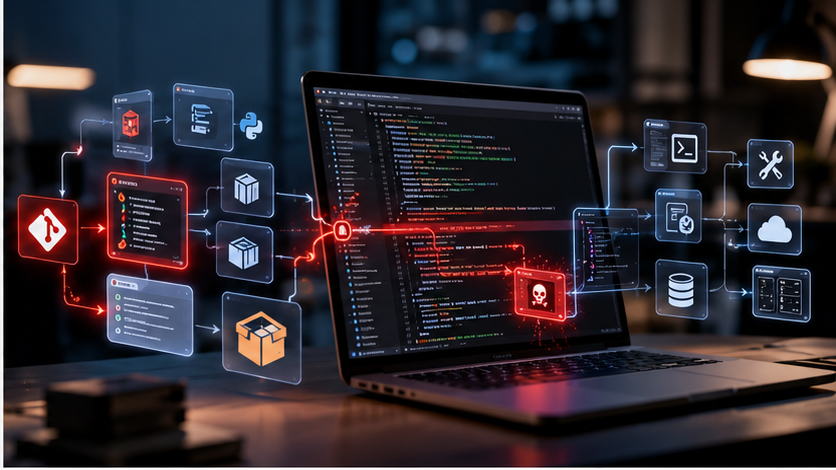
Coding agents changed the repository threat model: configuration, hooks, instructions and tool definitions can influence privileged agent behavior.
Read
MCP security is not mainly a prompt-filtering problem. Once an agent can call tools with real credentials, the useful threat model is identity + authorization + untrusted input + execution.
Read
Real attack paths cross code, identity, infrastructure, controls and organization-specific rules. Product security needs a full-system model.
ReadPrivate access for invited teams.